



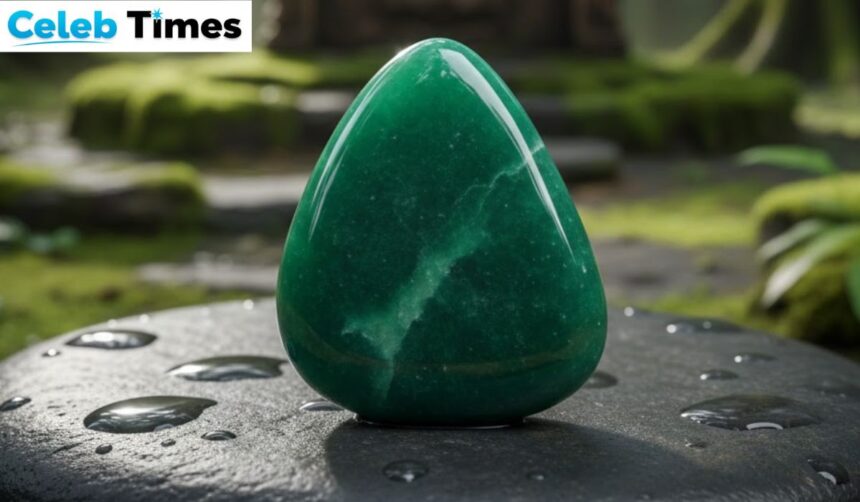
Introduction
Jadeitový kameň, known globally as Jadeite, is not merely a mineral but a cultural phenomenon that has spanned millennia. In the Slovak language, “Jadeitový kameň” refers to the high-quality pyroxene mineral that has captivated emperors, warriors, and healers alike. While it is often colloquially grouped with nephrite under the umbrella term “jade,” jadeite is the rarer and more precious sibling. Its name is derived from the Spanish phrase piedra de ijada, meaning “stone of the side,” a nod to the ancient belief that the stone could cure ailments of the kidneys and loins. This linguistic roots reflect a deep-seated human connection to the stone’s perceived biological and spiritual influence.
Historically, jadeite has been revered as a “Stone of Heaven” (Cisársky kameň). In ancient China, it was considered more valuable than gold or diamonds, symbolizing the five virtues of humanity: courage, modesty, justice, compassion, and wisdom. Beyond its mesmerizing shades of emerald, lavender, and translucent white, the stone possesses an incredible physical toughness, a result of its interlocking crystalline structure. This unique durability allowed Neolithic civilizations to craft it into nearly indestructible axe heads and weapons, while later societies transitioned into using it for exquisite jewelry and sacred talismans. Today, Jadeitový kameň remains a cornerstone of lithotherapy and luxury design, continuing to serve as a bridge between the physical earth and the spiritual aspirations of those who wear it.
Jadeitový Kameň | Profile
| Feature | Details |
| Full Name | Jadeitový kameň (Jadeite) |
| Date of Birth | Formed millions of years ago (Metamorphic) |
| Age | Ancient (Neolithic Era–Present) |
| Place of Birth | High-pressure metamorphic zones (e.g., Myanmar) |
| Nationality | Global (Primarily Burmese, Chinese, and Mayan) |
| Profession | Healing Stone, Luxury Gemstone, Sacred Talisman |
| Years Active | Over 5,000 years |
| Education | Studied in Mineralogy and Gemology |
| Religion | Sacred in Buddhism, Taoism, and Mayan traditions |
| Marital Status | “Married” to the Heart Chakra |
| Net Worth | Priceless (Market value up to millions per carat) |
| Family | Nefrit (The tougher, more common sibling) |
Historical Significance and Global Roots
The story of Jadeitový kameň begins in the high-pressure, low-temperature metamorphic environments deep within the earth’s crust. Unlike many other gemstones that are found in volcanic pipes, jadeite is a product of tectonic subduction. This “birth” under extreme pressure is what gives the stone its legendary toughness. Historically, the most famous sources were in Upper Burma (now Myanmar), which remains the primary source of the world’s most valuable “Imperial Jade.” For the Maya and Aztecs, jadeite was a sacred link to the gods of wind and water, often buried with royalty to ensure a safe passage to the afterlife.
In Asian cultures, particularly in China, the stone’s history is a reflection of the empire’s own growth. It was used to create the “Bi” disks—flat, circular stones with a hole in the middle—which symbolized heaven. For centuries, the use of high-quality jadeite was restricted to the imperial court. It was believed that a person’s status and virtue could be judged by the quality of the jade they carried. This historical reverence has not faded; today, jadeite auctions in Hong Kong and Beijing often fetch prices that rival the world’s most expensive diamonds, proving that its “royal” status remains intact.
Physical Properties and Scientific Profile
Scientifically, Jadeitový kameň is a sodium aluminum silicate with the chemical formula $NaAlSi_2O_6$. On the Mohs scale of hardness, it ranks between 6.5 and 7, making it harder than its sibling, nephrite. However, its most impressive feature is its “toughness”—its resistance to fracturing. This is due to a densely felted, interlocking grain structure that acts like a microscopic weave, absorbing shocks that would shatter a diamond. This durability is why ancient “Jadeite” tools found today are still sharp and intact after thousands of years.
The color of jadeite is highly variable and depends on trace elements. Pure jadeite is actually white. The famous vibrant green, known as “Imperial Green,” is caused by the presence of chromium. Other varieties include lavender (caused by manganese and iron), yellow, red, and even a rare “Olmec Blue.” Transparency is another key factor in its valuation; the most prized pieces are semi-transparent with a “wet” or “greasy” luster that seems to glow from within. In modern gemology, jadeite is often categorized into “Type A” (untreated), “Type B” (bleached and polymer-impregnated), and “Type C” (dyed), with Type A being the only one considered a true investment-grade stone.
Spiritual Meaning and Emotional Healing
In the realm of alternative medicine and lithotherapy, Jadeitový kameň is often referred to as the “Sovereign of Harmony.” It is deeply connected to the Heart Chakra, acting as a filter for negative emotions and a magnet for love and friendship. Many practitioners believe that holding a piece of jadeite during meditation helps in achieving a state of “wu wei” or effortless action. It is said to soothe the nervous system, reducing anxiety and promoting a sense of self-sufficiency and confidence.
The stone is also known for its ability to foster “Dream Work.” When placed under a pillow, it is believed to help the sleeper remember dreams and gain wisdom from their subconscious mind. For those struggling with irritability or chronic stress, the cooling energy of jadeite acts as a calming anchor. It encourages the wearer to see life’s challenges with playfulness and spontaneity, rather than fear. This emotional balancing is perhaps the most sought-after benefit of the stone in the modern, fast-paced world, where inner peace has become a luxury.
Physical Health and Protective Powers
The traditional name “bedrový kameň” (hip stone) points directly to its primary use in ancient physical healing. It has long been associated with the filtration and elimination organs, specifically the kidneys, spleen, and suprarenal glands. Many believe that wearing jadeite close to the skin helps balance the body’s fluid systems and remove toxins. While these claims are not a substitute for modern medical advice, the tradition of using jadeite for detoxification remains a core part of Eastern wellness practices.
Beyond internal health, jadeite has found a modern home in the beauty industry. The “Jade Roller” and “Gua Sha” tools have become global staples for skincare. Because jadeite naturally maintains a cold temperature, it is used to reduce puffiness, improve blood circulation, and promote lymphatic drainage in the face. Additionally, it is widely used as a protective talisman. In many cultures, parents give their children jadeite pendants to wear as a shield against accidents and negative energy, believing the stone will “take the hit” for the wearer, sometimes even cracking to protect them from harm.
Famous Artifacts and Cultural Legacy
Jadeitový kameň has left an indelible mark on human history through iconic artifacts. One of the most famous is the “Jade Cabbage,” a small, intricately carved piece of jadeite currently housed in the National Palace Museum in Taipei. This masterpiece uses the natural color zoning of the stone to depict a realistic head of bok choy with insects on its leaves. Another legendary piece is the “Hutton-Mdivani Necklace,” which features 27 graduated jadeite beads of the highest quality and sold for over $27 million at auction, setting a world record for jade jewelry.
The legacy of the stone continues in modern pop culture and luxury fashion. High-end jewelers like Cartier and Tiffany & Co. have long incorporated jadeite into their most prestigious collections. It also appears in film and literature as a symbol of mystery and ancient power. From the ritual masks of the Maori in New Zealand to the funeral suits of Han dynasty royalty, which were made of thousands of jade pieces sewn together with gold wire, Jadeitový kameň has always been the medium of choice for those wishing to communicate permanence, divinity, and eternal beauty.
FAQs
Is Jadeitový kameň different from Nephrite?
Yes. While both are called “Jade,” Jadeite is a pyroxene mineral (harder and rarer), whereas Nephrite is an amphibole (tougher and more common).
What is the most valuable color of Jadeite?
“Imperial Jade,” a translucent, vivid emerald green, is the most valuable and rare color, often exceeding the price of diamonds per carat.
How can I tell if my jadeite is real?
Genuine jadeite is very cold to the touch and has a distinct “musical” chime when struck. However, the only certain way is through a laboratory test for specific gravity and refractive index.
Conclusion
Jadeitový kameň is more than a beautiful gemstone; it is a profound testament to the enduring relationship between humanity and the earth. Through its transformation from a rugged metamorphic rock into a polished symbol of virtue, it mirrors the human journey toward wisdom and refinement. Its legendary toughness serves as a metaphor for resilience, while its vibrant colors represent the diverse beauty of the natural world. Whether used by an ancient Aztec priest to heal a companion or by a modern woman to enhance her skincare routine, the stone’s energy remains consistent, it is a source of calm, protection, and prosperity.
In an age of synthetic materials and fleeting trends, the timelessness of Jadeitový kameň offers a grounding presence. It reminds us that true value is found in things that endure, and that harmony is something to be cultivated within our own hearts. As a “Stone of Heaven,” it continues to inspire awe in scientists for its physical properties and in spiritualists for its metaphysical depth. To own a piece of jadeite is to hold a fragment of history, a slice of the earth’s deep secrets, and a promise of good fortune. It remains, as it has been for thousands of years, a treasure that transcends wealth, connecting us to a legacy of beauty that will never fade.