


Overview
In today’s fast-moving digital landscape, marketing teams and creators often need visuals at a much faster pace than traditional design workflows allow. Whether you’re launching a product, announcing a feature update, promoting a sale, or publishing social media content, visuals play a major role in grabbing attention and communicating your message effectively. However, creating high-quality images usually requires design skills, time, and sometimes expensive tools.
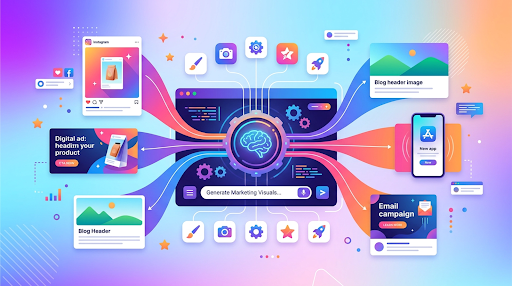
This is where AI image generation tools are transforming the way marketers work. Instead of spending hours designing graphics or searching for stock images, you can simply describe the visual you want and let AI generate it within seconds. These tools can produce social media graphics, product visuals, promotional banners, concept images, and even creative marketing artwork instantly.
For startups, creators, and marketing teams launching campaigns quickly, AI image generators offer a major advantage. They help you reduce design time, test multiple visual concepts rapidly, and produce consistent branding assets without relying heavily on manual design processes. This makes them especially useful for content marketers, social media managers, e-commerce brands, and product teams who need visuals on demand.
Another benefit is flexibility. AI tools allow you to experiment with different styles, colors, compositions, and themes without starting from scratch each time. This enables marketers to create visuals tailored for different platforms like Instagram, landing pages, ads, blogs, and product launches.
In this article, we’ll explore five powerful AI image generator tools that can help you create marketing visuals quickly. These tools make it easier to transform ideas into compelling images, allowing you to launch campaigns faster and maintain a strong visual presence online.
2. Midjourney
Midjourney has gained strong popularity among designers, marketers, and creative professionals because of its ability to generate highly detailed and artistic visuals. The tool is known for producing visually rich images that often resemble digital art or cinematic illustrations, making it a great choice for marketing campaigns that require eye-catching visuals.
One of the biggest strengths of Midjourney is its ability to interpret creative prompts and transform them into imaginative visuals. Marketers can generate concept artwork, promotional graphics, futuristic product visuals, or storytelling imagery simply by describing the scene they want. This helps brands experiment with creative marketing ideas without spending large amounts of time on manual design.
Another advantage is the level of detail and atmosphere the tool can generate. Midjourney often produces images with dramatic lighting, unique textures, and artistic styles that stand out on social media feeds or digital campaigns. These visuals can help brands build a distinctive identity while capturing audience attention.
For marketing teams working on brand storytelling, product teasers, or visual campaigns, Midjourney provides a creative playground where ideas can quickly become compelling visuals.
3. Stable Diffusion
Stable Diffusion is a flexible AI image generation model that gives creators a high level of control over the visual output. Unlike many tools that operate only through online platforms, Stable Diffusion can also run locally, which makes it attractive for developers, designers, and businesses that want more customization and privacy.
One of the main benefits of Stable Diffusion is its adaptability. Marketers can generate a wide variety of visual styles ranging from product images and conceptual marketing art to social media graphics and promotional banners. Because the model supports customization and extensions, users can fine-tune outputs to match their specific brand aesthetics.
Another key advantage is scalability. Businesses can integrate Stable Diffusion into their workflows to generate large volumes of images quickly. This is particularly helpful for e-commerce brands that need multiple visual variations for product listings, advertising creatives, or seasonal promotions.
The flexibility of Stable Diffusion makes it a valuable tool for teams that want deeper control over their image generation process while still benefiting from AI-driven creativity.
4. Leonardo AI
Leonardo AI has become increasingly popular among creators and marketers who want high-quality AI-generated visuals with refined detail. The platform focuses on producing images that are polished and visually appealing, which makes it suitable for marketing materials, digital artwork, and branded content.
One of the notable strengths of Leonardo AI is its ability to generate clean and consistent visuals that align well with professional marketing standards. Marketers can create campaign graphics, product scenes, and stylized illustrations that look production-ready without requiring extensive editing.
The platform also offers a variety of visual styles and creative controls. Users can experiment with different artistic directions, allowing them to produce visuals that match a specific brand personality or campaign theme. This flexibility helps marketing teams develop unique content while maintaining visual consistency.
Leonardo AI is particularly useful for brands that want creative visuals but still require a polished and professional look for advertising or promotional use.
5. Adobe Firefly
Adobe Firefly is designed to integrate AI-powered image generation into the broader Adobe creative ecosystem. For marketers and designers who already work with design tools, Firefly offers a convenient way to generate images and creative elements directly within familiar workflows.
One of the biggest advantages of Adobe Firefly is how it blends AI generation with traditional design tools. Marketers can generate images, modify styles, and refine visual elements without leaving the design environment. This makes it easier to produce marketing assets quickly while maintaining high design quality.
Firefly is also designed with brand-safe content creation in mind. The tool focuses on generating visuals suitable for commercial use, which is important for businesses launching marketing campaigns, advertisements, or branded graphics.
For teams that already rely on design software for creative projects, Adobe Firefly offers a smooth way to introduce AI-generated visuals into existing marketing workflows.
Conclusion
Speed and creativity are essential for modern marketing, especially when launching campaigns or promoting products in competitive digital environments. AI image generator tools make it possible to create compelling visuals in minutes instead of hours, helping marketers respond quickly to trends and campaign opportunities.
By using AI-powered image generation, teams can explore new creative directions, produce visuals for multiple platforms, and experiment with different concepts without significant design effort. This allows businesses to stay agile and maintain a consistent flow of visual content across social media, websites, ads, and product pages.
Tools like the ones covered in this article make it easier for creators, startups, and marketing teams to generate high-quality visuals quickly. As AI technology continues to evolve, these tools will likely become even more powerful, enabling marketers to produce engaging content faster and more efficiently than ever before.